



Bollards (Ref ZVRGMX)
Stainless steel, mild steel and concrete-filled bollards to guide traffic, protect pedestrians and shield buildings, with professional installation and ongoing maintenance across the UAE.
View details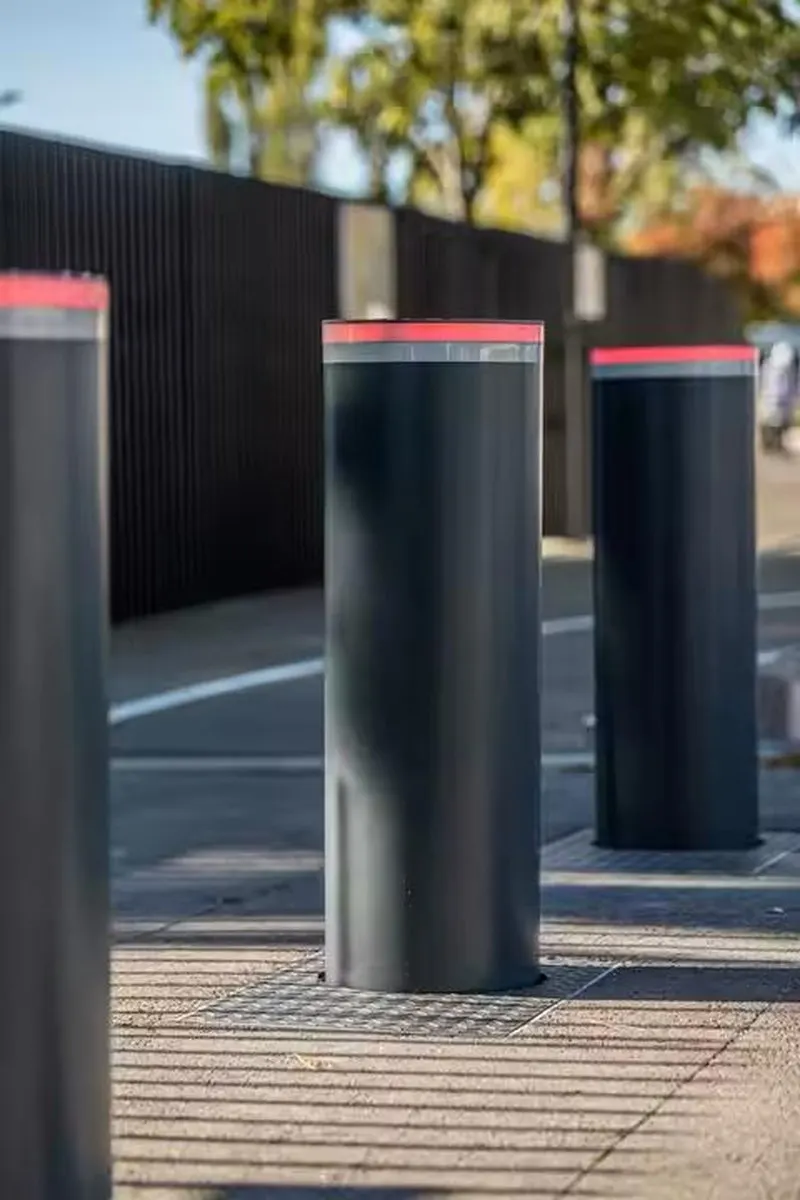
Bollards for Ajman shopfronts, plazas and driveways: fixed for constant protection, removable or automatic for controlled vehicle access. Foundation, drainage and finish are chosen for the soil and the salt air.
Bollards are quiet protection. Along the Ajman Corniche they separate walkers from traffic, outside shops they stop vehicles mounting the pavement, and at private entrances they keep drivers to the intended route.
Fixed bollards give permanent guidance, removable ones open up access when needed, and automatic ones rise and lower on command for authorised vehicles. Salt air means finish selection is important, and underground utilities have to be located before anyone digs. We survey, propose the type and spacing, then install. For a single product overview, visit bollards, or ask us for a visit anywhere in Ajman. We can also suggest reflective bands so bollards stay visible at night on unlit access roads and car parks.
Bollards guide traffic and protect pedestrians and property in Ajman, from Corniche paths to shopfronts and private entrances. Fixed, removable and automatic types suit different access needs, and coastal air makes finish choice important. QNAD surveys, supplies and installs them.
Outside a shop on a busy Ajman road, a delivery van mounted the kerb and hit the shutters. Bollards prevent that kind of accident, and they do more than one job.
Fixed bollards give constant protection and cost the least. Removable ones can be lifted out for occasional vehicle access, while automatic bollards rise and lower on command for regular access with security. Which one you need depends on how often vehicles must pass. See the bollards page for details.
The foundation must suit the soil and the load, and drainage matters for retracting types. Near the sea, stainless or coated steel resists salt. In busy roads, reflective bands and lighting improve visibility. Underground services should be located before excavation.
Automatic bollards can link to intercom, card readers, traffic lights or your sliding gate system. The price depends on quantity, type, material, foundation work, controls and whether an impact rating is needed.
Bollards protect through spacing as much as strength. A row spaced closely enough to block vehicles, yet wide enough for wheelchairs and prams, is the usual approach. We mark the positions on site so you can walk the route before anything is fixed.
Remember lighting and visibility. A bollard nobody sees at night is a hazard. Reflective bands, lit tops and contrasting colours make them obvious to drivers on dark corners in places such as the Corniche approaches.
Where bollards guard a driveway entrance, they pair well with a sliding gate that keeps the vehicle line tidy. Think about how pedestrians will use the same space, and keep a comfortable gap for wheelchairs and prams so the protection does not become an obstruction.
Send your site plan or photos on the quote page and we will suggest a layout.
Stainless steel, mild steel and concrete-filled bollards to guide traffic, protect pedestrians and shield buildings, with professional installation and ongoing maintenance across the UAE.
View details
Fixed, removable and automatic bollards in steel, stainless steel or concrete-filled forms, with groundwork, loops, lighting and servicing for sites across the UAE.
View detailsQasar Al Neil Automatic Doors supplies Bollards in Ajman, with a free site visit, installation and servicing by our own technicians. We also supply to Sharjah, Dubai, Abu Dhabi and Ras Al Khaimah. We are also supplying across the UAE.
Yes, while our base is in Ajman, we supply and install automatic bollards across Dubai and the wider UAE for retail entrances, government facilities, hotel driveways and pedestrian zones. Delivery and installation timelines depend on quantity and any civil works needed for the foundation.
We handle the full scope: foundation preparation, bollard installation, control panel wiring and access integration, whether it is a single bollard at a private driveway or a row protecting a shopping mall entrance.
A fixed bollard is a permanent post, cheapest option, used where you never need vehicle access through that point. An automatic rising bollard retracts into the ground on command, from a remote, keypad, RFID card or ANPR camera, letting authorized vehicles through while blocking everyone else.
Fixed bollards make sense for pedestrian-only zones or permanent perimeter protection. Automatic bollards are the right call anywhere vehicles need occasional or scheduled access, like a private car park, hotel drop-off or a loading bay that also needs to stay secure after hours.
Pricing depends on whether it is hydraulic or electromechanical, the rising height, and how many units and what access control method you need. Hydraulic bollards, which are stronger and typically crash-rated, cost more than lighter electromechanical bollards used for access control rather than vehicle security.
A single automatic bollard installed with basic remote control access starts at a moderate cost, rising with crash-rating and integration with ANPR or card readers. We quote per project after a free site survey since foundation depth requirements vary by soil and existing surface.
Yes. We regularly pair automatic bollards with ANPR cameras so a registered vehicle's plate is read automatically and the bollard drops without the driver needing a card or remote, which is common at gated compounds, corporate car parks and hotel entrances that want a fully hands-free entry.
This setup also logs every vehicle movement, useful for facilities that need an audit trail of who entered and when. We configure the ANPR whitelist and bollard timing together so there is no awkward pause between plate recognition and the bollard retracting.
If your shopfront has had issues with vehicles parking illegally in front, or you need to protect a pedestrian walkway that occasionally needs delivery vehicle access, a bollard is a cost-effective and low-maintenance solution compared to a full barrier system. A single or pair of bollards is usually enough for a shopfront-width opening.
For a small retail unit we would generally recommend a lighter electromechanical bollard rather than a heavy crash-rated hydraulic one, since the goal there is controlled access and deterrence rather than vehicle-ramming protection.
We recommend a service visit every six months for bollards in regular daily use, checking the hydraulic seals or motor gearbox, the rising sensor, control board and any access control integration. Bollards installed in areas with heavy dust or standing water after rain need more frequent checks of the drainage around the foundation.
A bollard that starts rising or lowering slowly, or making unusual noise, should not be left running that way, since it usually signals a hydraulic seal or motor issue that gets more expensive to fix the longer it runs.
Crash rating requirements depend on the specific facility's risk assessment and the standard specified by the relevant UAE authority or consultant, commonly referenced against international standards like IWA 14-1 or PAS 68 for vehicle impact resistance. Government buildings, embassies and critical infrastructure sites usually require a rated hydraulic bollard tested to stop a specific vehicle weight at a defined speed.
We supply crash-rated bollard systems and can work with your project consultant to match the rating specified in the tender or security assessment rather than guessing at a generic product.
Yes, Al Zorah's mixed residential and hospitality developments are within our coverage area, and we install and maintain automatic bollards, barriers and access control systems for gated communities, hotels and commercial properties there.
Given Al Zorah's coastal location, we also pay extra attention to corrosion protection on metal components during installation, since salt air exposure can accelerate wear on unprotected hardware near the coast.
A boom barrier controls vehicle flow quickly and is the standard choice where you want fast, high-volume traffic control with a visible deterrent. An automatic bollard gives a stronger physical barrier when raised and is a better fit where actual vehicle-ramming protection, not just traffic flow control, is a genuine concern.
Many compound entrances use both together: a barrier for routine traffic control paired with fixed or automatic bollards along the edges to stop a vehicle simply driving around the barrier arm.
Bollards inside your own plot or shop frontage are usually simpler than bollards on a pavement or road, but the rule depends on who owns the land, so check before you order. In Ajman, Sharjah and Dubai the municipality, the developer or the community management can all be involved.
We can supply drawings and product data for your application. Compare bollards or read when approval is needed. Send a photo of the entrance and we book a free site visit.
A bollard is a short, strong post fixed in the ground to stop vehicles while letting people walk past. The word is also used for the small posts that mark a lane or a kerb, so the meaning depends on the job: guiding traffic, protecting a building, or blocking a vehicle route.
Fixed bollards stay in place. Removable bollards lift out of a ground socket with a key. Automatic bollards rise and lower on a card, remote or intercom signal. Crash-rated versions are tested to an international standard, so ask for the test report if impact protection is the goal.
Compare bollards, read the bollard service page or the guide to bollard types and uses. For a recommendation, send a photo of the entrance and we book a free site visit.
A crash-rated bollard is tested to stop a vehicle of a defined weight at a defined speed under standards such as PAS 68, IWA 14 or ASTM F2656. The rating tells you the impact energy it is proven to withstand.
They are used where hostile vehicle mitigation is required, such as government buildings or high-profile sites. The rating only holds if the bollard is installed on the engineered foundation the test specified. Ordinary decorative bollards are not crash rated. Discuss your risk level with us before choosing bollards.
Usually yes, with a phased plan. Work is done in sections, often at night or off-peak hours, using temporary barriers so traffic and pedestrians can keep moving.
Where roads or pavements are affected, municipality or developer permissions are normally needed first. The plan also covers safe storage of materials and curing time for concrete. Share your location and working hours and we will propose a sequence for your bollard installation.
Yes, bollards can be lit or reflective. Fixed and retractable bollards can carry LED lights, reflective bands or solar caps that improve night-time visibility.
Lighting matters most for automatic bollards, because a raised bollard must be seen clearly by approaching drivers. Reflective bands cost little and suit most sites, while integrated LEDs add a stronger warning and can signal status. Ask about lighting when specifying bollards for car parks and building entrances.
It depends on the job: gates, bollards and shutters on or near public land, and anything that affects fire or emergency access, usually need approval, while a gate inside your own boundary often needs only community or landlord consent. The rules differ by emirate and by building, so confirm with the authority before ordering.
Ask your landlord, community management or building consultant who applies, and check with Civil Defence or the municipality for anything touching fire safety or public land. We can supply drawings and product data for your file. Ask before ordering bollards or rolling shutters so approvals do not delay the work.
Start with a free site visit or request a quote.
Look beyond the dent. An impact can crack the foundation, loosen the anchor or bend the post below ground level, and a bollard that looks fine can fail the next time it is hit. Check whether the post moves when you push it and whether concrete around the base is cracked.
For an automatic bollard, the drive and the pit may also be damaged. Qasar Al Neil Automatic Doors inspects the post, the foundation and the drive, then repairs or replaces what is needed rather than just repainting the post.
The pit is the usual culprit. If the drain has blocked, water and sand collect around the post and slow it down. On a hydraulic unit, a worn seal or low fluid causes the same problem. A dry or dirty guide can also make the movement stiff.
Clearing the drain and cleaning the pit often restores normal movement, but a hydraulic fault or a failed drive needs a technician. Qasar Al Neil Automatic Doors can test the unit, clear the pit and repair the drive or seals.
Yes, because bollard foundations go down further than most people expect. On the site visit we look at the area, ask about known services under the paving, and mark where cables or pipes could be. Where the plans are unclear, the groundwork starts carefully and the foundation position can be moved a little.
It also affects the choice between a fixed bollard and an automatic one, because an automatic bollard needs a deeper pit, drainage and a power and signal route.
Most bollards carry reflective bands, which show up in headlights. For busier or darker sites, you can add lighting, either built in or a separate lamp, so drivers and pedestrians see the post from further away. Colour matters too: yellow or red bands stand out better than plain steel.
Automatic bollards also use warning lights and traffic signals that show when the post is rising or lowering. We suggest a combination on the site visit based on the lighting you already have and the speed of the traffic.
Choose fixed bollards to block access permanently and automatic bollards where authorised vehicles must pass. Fixed units are simple and low maintenance and suit pedestrian zones and shopfront protection. Automatic (retractable) bollards lower into the ground on demand, controlled by a reader, remote or intercom, and suit entrances that must open to service, emergency or resident vehicles.
Automatic units need drainage, power and regular servicing. See our bollards range.
Yes. Fixed bollards are usually cast into a concrete foundation or bolted to a base plate, which means paving is cut, the unit is set, and the surface is made good afterwards. Shallow-mount options exist where digging is limited, though they resist less impact. Underground services must be located before drilling.
We survey the surface and the utilities below it before recommending a fixing method for your bollards.
Automatic bollards need regular checks of the drainage, the hydraulic or electric drive, the safety sensors and the control unit. Grit and standing water are the main threats to retractable units, so sumps and drains must stay clear. Lights, reflective bands and the manual release should be tested during each visit.
A maintenance contract keeps these checks scheduled. Our bollard service covers inspection and repair.
A free site survey and a written quote across Ajman.
Survey, supply, fitting, wiring, programming and safety testing, done in a day for most jobs.
Installation details →Fault-finding and same-visit fixes for motors, boards, remotes, sensors and safety edges.
Repair details →Parts we repair & replace:
Tell us about your site. A specialist will contact you shortly with a tailored proposal.
Qasar Al Neil Automatic Doors team is online