


Quick answer
For a shop front, a rolling shutter or a roller grille fits best. A solid shutter gives privacy and full cover, a grille gives ventilation and a night-time display. For a warehouse bay with trucks, a sectional door or an insulated rolling shutter fits, depending on headroom and how often it opens. A sectional door needs more room above the opening, and a rolling shutter coils into a box at the top. Daily opening counts decide the motor and the door.
Key takeaways
- A rolling shutter coils into a box above the opening. A sectional door travels back along tracks and needs more headroom and ceiling space.
- A roller grille lets air and light through and shows the goods at night, but gives less privacy and less insulation than a solid shutter.
- Insulation matters for cooled stores and sun-exposed openings. A double-skin foam-filled shutter or an insulated sectional door both help.
- Count the openings per day before you choose. A door that opens fifty times an hour needs a different spec than one that opens twice.
- In Ajman and Sharjah, sand in the guides and salt on the fixings decide how long any of them lasts without servicing.
Short answer: for a shop front, choose a rolling shutter if you want full cover and privacy, or a roller grille if you want airflow and a lit display at night. For a warehouse bay, choose an insulated sectional door when you have headroom and want a tight seal, or a rolling shutter when headroom is short and the opening is large. If a bay opens many times an hour, look at a high speed door instead. The right choice depends on four things: headroom, security, insulation and how often it opens.
Key takeaways
- A rolling shutter coils into a box above the opening. A sectional door runs back along tracks and needs more space above and behind the opening.
- A roller grille lets light and air through. A solid shutter does not.
- Insulation is worth paying for in cooled stores and openings that face the afternoon sun.
- Count the daily openings before you choose a door and a motor.
- Sand and salt decide how often any of them needs servicing.
Door or gate giving you trouble?
Call +971 50 495 3512 WhatsApp us Get a quote
Open 24/7 · Same-day technician · Free site visit
What is the difference between a rolling shutter, a roller grille and a sectional door?
Rolling shutter. A curtain of interlocking horizontal slats, usually steel or aluminium, that rolls up around a barrel in a box above the opening. Slats can be solid, perforated, or a mix. It is the common shop front shutter and also used for large industrial openings. A UAE supplier page we read describes steel slats from 0.8 to 1.2 mm in several profiles, and says rolling shutters can replace sectional overhead doors in warehouses and loading areas, including very large openings.
Roller grille. A rolling shutter with open links or bars instead of solid slats. It rolls up the same way. You can see through it, air passes through it, and light from the shop reaches the street at night. It is not the same thing as a perforated slat, which still reads as a solid curtain with holes.
Sectional door. A door made of hinged horizontal panels that rise and travel back along tracks under the ceiling. It is the usual choice for villa garages and many warehouse bays. Panels can be insulated, with windows, and a good seal around the edge.
How do they compare for a shop or warehouse?
| Factor | Rolling shutter | Roller grille | Sectional door |
|---|---|---|---|
| Headroom needed | A box above the opening, usually compact | Same as a shutter, often a smaller box | More: track and panels run back under the ceiling |
| Side room | Guide rails on each side | Guide rails on each side | Track and spring mechanism on each side |
| Opening size | Very wide openings possible | Shop widths, with limits by type | Typical truck and car widths, large sizes need more engineering |
| Privacy | Full when solid, partial when perforated | Low, you see through it | Full |
| Ventilation and display | Only with perforated slats | Good, the main reason to choose it | None, unless it has window panels |
| Security | Strong against casual attack with the right slat and lock | Strong against a smash and grab, depends on the type | Depends on panel and lock, usually less used as a front line security product on a shopfront |
| Insulation | Double-skin foam-filled slats insulate, single skin does not | None | Insulated panels with seals are common |
| Dust and wind sealing | Guides and bottom bar, gaps remain | Open by design | Better seal when new, with seals on all sides |
| Speed and cycles | Slow to moderate, fine for a shop that opens twice a day | Same as a shutter | Moderate. For high frequency, a different door is better |
| Noise | Slat rattle when old or when sand builds up | More rattle, an open structure | Quiet when the rollers and tracks are in good order |
| Upkeep | Clean the guides, lubricate, check the motor | Clean links, check guide | Check springs, cables, rollers, seals |
We left prices out on purpose. They depend on size, slat or panel type, insulation, motor and finish. A site visit gives a fixed quote.
Which is best for a shop front?
Most shops in Ajman, Sharjah and Dubai choose between a solid or perforated rolling shutter and a roller grille. The decision usually comes down to what you sell and what the street looks like at night.
- Solid rolling shutter. Best where goods should not be visible when you close, for example mobile phones, electronics, jewellery or a clinic front. It gives full cover and a place for a painted sign. It is not ventilated, so a shop that stays hot behind it will be hot in the morning.
- Perforated slats. A compromise. You get some light and airflow and some view in, and you keep most of the security. A supplier page we read lists perforated slats as one of four profile options.
- Roller grille. Best for display. Fashion, perfumes and a lit window can sell at night in a mall corridor or a busy street. Some malls and landlords require or prefer a grille, so check what your landlord or the mall management allows before you order.
Read our guide to choosing rolling shutters for shops for sizing, and the page on rolling shutters in Ajman for shops and industrial units.
Which is best for a warehouse?
For warehouses the key questions are headroom, how often the opening is used and whether the space is cooled.
- Short headroom, big opening. A rolling shutter coils into a box and does not need track under the ceiling. Choose it when there is a beam, a mezzanine or racking close to the opening.
- Enough headroom, tight seal wanted. A sectional door with insulated panels and perimeter seals is the usual choice. It keeps cooled air in, dust out and noise down, and it looks better on an office or showroom bay.
- Cooled store or sun on the opening. Look at a double-skin insulated rolling shutter or an insulated sectional door. A single-skin steel curtain on a west-facing bay heats the space behind it all afternoon.
- Industrial yard, many trucks. A heavy-duty warehouse shutter, solid or ventilated, with a motor rated for the daily load.
- A bay that opens many times an hour. Slow doors cost you time, and the motors wear out. Look at a high speed door and read our high speed door buyer's guide.
If trucks load at the opening, the door is only part of the setup. A dock leveler and the door need to be specified together. See our dock leveler guide.
Do I need an insulated door in the UAE?
Where you are cooling the space, yes, it is worth asking about. Heat comes through a single-skin steel curtain, and the air-conditioning load goes up. Double-skin foam-filled slats and insulated sectional panels reduce heat transfer and noise, and they come with seals that limit air leakage. For a general-purpose warehouse that is not cooled, insulation is less of a priority than headroom and security. Nobody can quote the saving for your building without a survey, so ask for an assessment before paying extra.
What does sand, heat and salt do to each type?
- Rolling shutters and grilles. Fine sand collects in the side guides and the bottom bar, and the curtain starts to drag. Salt air attacks the guides, locks and motor housing near the coast. Regular cleaning and lubrication keep them moving. Our rolling shutter maintenance guide sets out a calendar.
- Sectional doors. Sand in the track rollers and corrosion on springs and cables are the usual faults. The seals dry out and crack in the sun.
- Motors on all three. Heat in the motor and control box shortens life. A motor in the sun with no shade is a candidate for early failure. Ask where the control box will sit.
Whichever you choose, a service visit once a year is a sensible minimum for a busy opening. See our AMC checklist.
What about security?
Security is not a simple ranking. It depends on the slat or panel thickness, the lock, the bottom bar, the guides and what is behind the door. A solid steel rolling shutter with a good lock and anti-lift option is difficult to attack quickly. A roller grille resists a smash and grab, and lets police and CCTV see in, which some owners value. A sectional door protects a garage or a bay well but is not usually the product chosen for a shopfront. For a high-value store, ask the supplier about the lock, the slat thickness and anti-lift options, and ask your insurer what they require.
A warehouse door is also one part of an access system. See our guide to access control options.
What about fire and building rules?
Some openings need a fire-rated door, and that is set by the building's design and the authority, not by us. If your unit is in a building with fire compartments or an escape route, ask the building's management or the consultant what the opening requires, and ask any supplier for a certificate if a rated door is specified. We will not tell you that a standard shutter satisfies a rule we have not seen.
How do I pick, step by step?
- Measure the opening width, height and the space above it. Photograph the ceiling and any pipes, ducts or beams.
- Count openings. How many times per day, and at which hours. A shop might be twice a day. A bay might be hundreds.
- Decide about privacy and air. Do you want to see in, or not?
- Check insulation needs. Is the space cooled? Does the bay face afternoon sun?
- Check the rules. Landlord, mall, building management and fire requirements.
- Choose the power. Manual, motorised, with a battery backup for outages. See our guide to automatic gates and doors during a power cut.
- Ask for a written quote with the model, slat or panel type, finish, motor and warranty. Use the questions in our guide to choosing an automatic gate or door company.
When should I not choose a rolling shutter?
- When the bay opens very often. The curtain and motor are not built for it.
- When you need a good seal on a cooled space and have headroom. A sectional door will suit better.
- When noise matters, such as a shop below flats. A tight-fitting insulated door is quieter than an old curtain.
Choose something other than a sectional door when headroom is short, the opening is very wide, or you want to see in at night.
Frequently asked questions
What is the difference between a rolling shutter and a roller grille?
A rolling shutter has solid or perforated slats and blocks the view and the air. A roller grille has open links or bars and lets you see through it and air pass. Both coil into a box above the opening.
Which is better for a warehouse, a rolling shutter or a sectional door?
It depends on headroom, seal and cycles. A rolling shutter suits short headroom and very wide openings. An insulated sectional door suits a tight seal and a cooled space when headroom is available. Very frequent openings call for a high speed door.
Which shutter is best for a shop in the UAE?
A solid or perforated rolling shutter for full cover, or a roller grille for airflow and night display. Check what your landlord or mall allows before you order.
Do I need an insulated shutter for a store?
If the store is cooled or the opening faces the sun, ask about a double-skin foam-filled shutter or an insulated sectional door. For an uncooled store, headroom and security usually matter more.
How much headroom does a sectional door need compared with a rolling shutter?
A sectional door needs more space above and behind the opening for its tracks. A rolling shutter needs a coil box above the opening. Exact dimensions depend on the model, so ask for them in the quote.
How often should a rolling shutter or sectional door be serviced?
At least once a year, and more often for a busy or coastal opening. Sand in the guides and salt on the fixings are the main causes of wear in Ajman and Sharjah.
Book a free site visit
Tell us the opening size, the headroom and how often it opens, and we will say which door we would fit and why. A technician can measure and give a written quote for a shop in Ajman or Sharjah, or a warehouse in Al Jurf or the Sharjah industrial areas. Call or WhatsApp +971 50 495 3512, or request a free site visit here. Send a photo of the opening and the rough size and we will tell you what to expect before anyone drives out.
Need this done on your property?
Tell us the opening, the fault or the equipment. We reply with a free site visit and a written quote.
Call +971 50 495 3512 WhatsApp us Get a quote
Open 24/7 · Same-day technician · Free site visit
#buying-guide#rolling-shutters#shopfront-security#warehouse#sectional-doors#industrial-doors
Related products
-
 Featured
Automatic Sectional Garage Doors
Insulated automatic sectional garage doors for UAE villas and workshops: they lift vertically, need no swing space and run on a quiet operator with safety stops and remote or phone control.
View details -
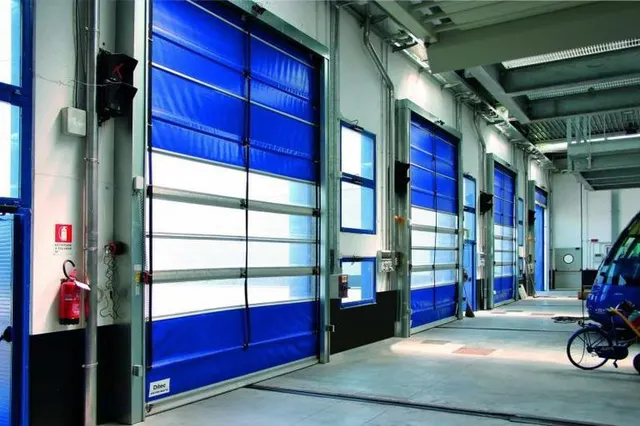
UltraSpeed High-Speed Door
A fast roll-up door for busy openings, cutting the time an entrance stays open, with safety sensors and a flexible curtain that is forgiving if hit.
View details -

Warehouse Shutter Doors
Large industrial rolling shutter doors for warehouses and loading bays, in solid-slat and ventilated designs, with heavy-duty motors and safety edges.
View details -
 Featured
Automatic Rolling Shutters
Motorised rolling shutters in steel or aluminium for shops, stores, workshops and loading bays, with safety edges, remote control and a manual override for power cuts.
View details -
 Featured
Double Skin Insulated Rolling Shutters
Double skin, foam-filled insulated rolling shutters for cold rooms, air-conditioned stores and sun-exposed openings, with seals, a sized motor and safety devices.
View details -

Residential Rolling Shutters
Motorised rolling shutters for villa windows, patio doors and terraces, cutting glare and heat while adding privacy and security, with remote control and manual override.
View details