


Quick answer
Keep children and pets safe around automatic gates and garage doors with three layers: sensors (photocells, a safety edge and automatic reverse), physical protection (guards, small gaps, separate pedestrian access) and family habits (remotes out of reach, nobody plays on or under moving doors). Test the sensors monthly with a box, never a child or pet.
Key takeaways
- Use three layers: sensors, physical protection and family rules.
- Photocells at one height can pass over a small pet, so ask about a lower second pair.
- Never let children ride, climb or hang on a gate or the release cord.
- Keep remotes and wall buttons out of reach, and teach children the gate is not a toy.
- Test the beam monthly with a box. Never test with a child or a pet.
- Springs, cables and wiring are for a technician only.
Short answer: Keep children and pets safe around automatic gates and garage doors with three layers: sensors (photocells, a safety edge and automatic reverse), physical protection (guards, small gaps, a separate pedestrian gate) and family habits (remotes out of reach, nobody playing on or under moving doors). Test the sensors every month with a box, never with a child or a pet.
Door or gate giving you trouble?
Call +971 50 495 3512 WhatsApp us Get a quote
Open 24/7 · Same-day technician · Free site visit
Why are automatic gates and garage doors a risk for children and pets?
Because they are heavy, they move on their own, and the people they endanger move without looking. A leaf on an automatic swing gate, a panel on an automatic sliding gate and a garage door panel are all built to move a large weight. A child who runs through the opening, or a cat that sits in the track, does not weigh enough to slow it. The safety comes from devices that detect the person first, and from habits that keep them away from the path.
This guide is for families in UAE villas, in Ajman, Sharjah and beyond. It is not a legal checklist, and it does not replace a technician. It lists the danger zones, says where the sensors should sit, and gives rules a family can follow. Our guide to gate safety for villas and compounds goes through each device in more detail.
Which zones around a gate and a garage door are dangerous?
Six zones cover almost every incident. Walk through them with your family, in daylight, with the gate or door moving, and point each one out to your children.
Zone, main risk and what reduces it
| Zone | Main risk | What reduces the risk |
|---|---|---|
| Closing edge of a gate | Knock or trapping against a pillar or the fence | Photocells, a safety edge, force set low, clear view of the gate |
| Hinge side of a swing gate | Finger crush where leaf and post meet | A guard on the hinge side and a small, even gap |
| Track and rack of a sliding gate | Fingers, paws and clothes caught in the drive | A cover, a guard and a clear path along the track |
| Garage door opening | Being trapped under a closing panel, or fingers in panel joints | Photocells near the floor, a tested reverse, a pinch resistant panel if offered |
| Springs, cables and rollers | Injury if touched, especially under tension | Nobody touches them. A technician only |
| Remotes and wall buttons | A child plays with the button and moves the door | Store remotes out of reach and fit the wall button high |
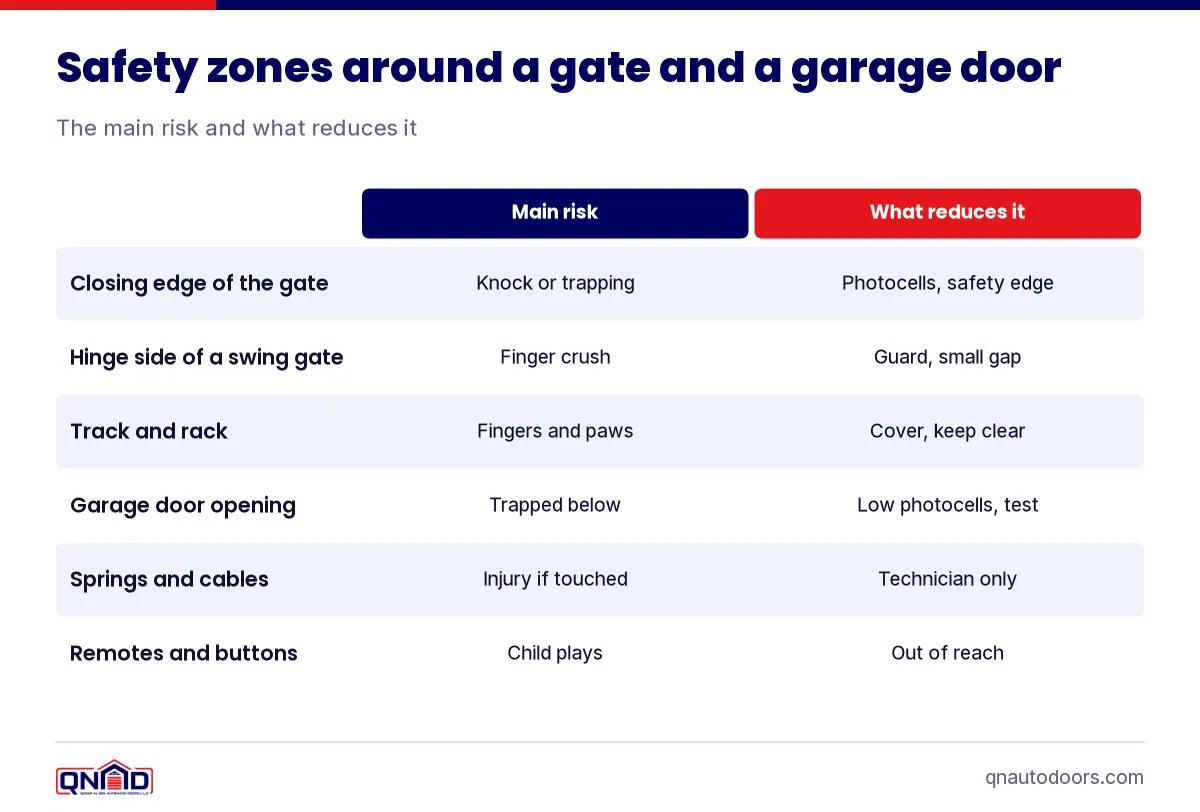
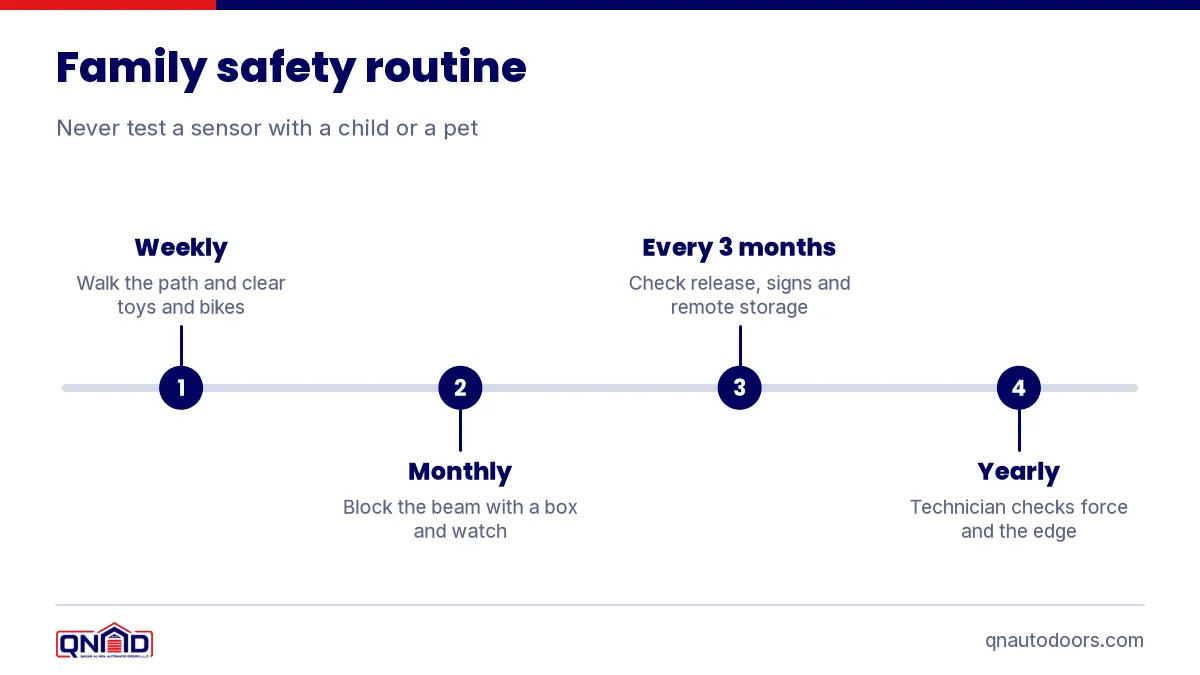
The chart repeats the table in a form you can print and stick inside a cupboard door. The right-hand column is the same for every family: a sensor, a guard, or a habit.
What sensors should an automatic gate have?
At least photocells across the opening, a safety edge on the moving edge where it is needed, automatic reverse on obstruction, a flashing lamp and a manual release. Our FAQ on what safety devices are required on automatic gates lists the baseline, and our photocells and safety sensors page shows what we supply. Requirements can also depend on the property and the manufacturer's instructions, so ask what yours need.
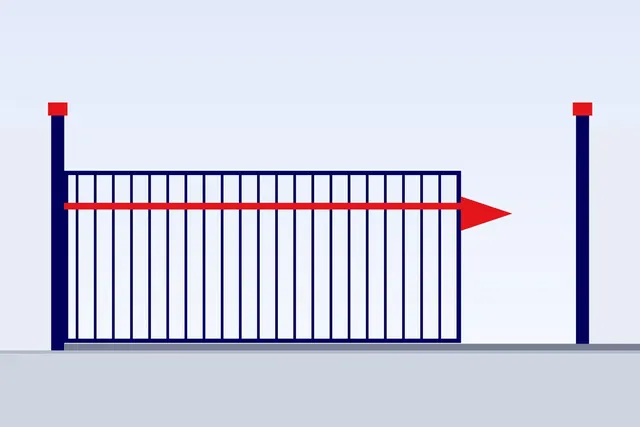
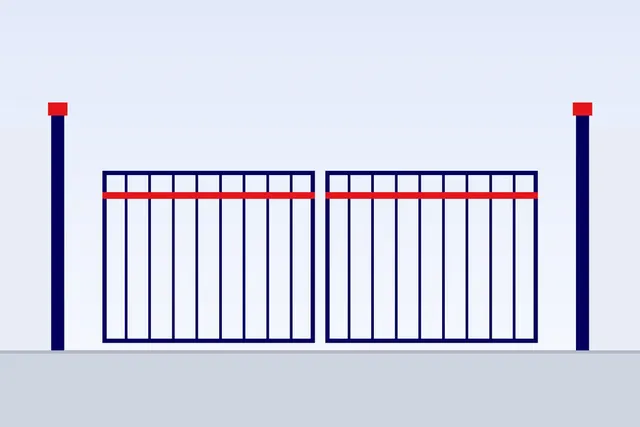
- Photocells: an invisible beam across the opening. If something breaks the beam while the gate is closing, the gate stops or reverses.
- Safety edge: a soft strip on the moving edge that detects contact and reverses the gate.
- Obstruction sensing: the control board notices extra resistance and reverses. It is a last layer, not the first.
- Flashing lamp: warns people, and especially children, that the gate is about to move.
- Manual release: lets an adult free the gate in a power cut or a fault.
Our FAQ on how to stop a gate from closing on a car explains the same layers for vehicles. The sensors that protect a car are the ones that protect a child, provided they sit at the right height.
Why do pets and small children need photocells set lower?
Because a beam at one height can pass over a small animal or a toddler. Many photocell pairs are fixed at one height on the posts. A cat, a small dog or a crawling child below that beam is not detected until the gate meets them. If small pets or young children are around, ask for a second pair set lower, or for a safety edge on the closing leaf.
Do not assume a gate that stops for a car stops for a pet. Test the beam at the height of the smallest creature you want to protect, using a box, not the animal. In villas with a low wall or a gap under the gate, as in older plots in Al Nuaimiya and Al Rawda in Ajman, a pet can enter the path from the side, so the beam is only part of the answer.
What about garage doors, springs and the release cord?
A garage door should reverse when it meets an obstacle, and should have photocells near the floor so the beam catches a child or a pet in the opening. Our FAQ on safety features an automatic garage door should have sets out the list. Keep the remotes in the car, not in a drawer where a child can reach them.
Springs, cables and rollers are under tension and should be left to a technician. Children are drawn to the red release cord or the handle, and hanging on it can drop the door. Fit it so it is out of reach, and tell children it is not a swing. The garage door itself should never be a play area, and nobody should stand or run under it while it moves. See our residential garage doors and garage door openers pages for what we supply.
What family rules actually work?
Short rules, repeated, with no exceptions. Children follow a rule they understand, and they test one they do not.
- The gate and the garage door are not toys. Nobody rides, climbs or swings on them.
- Nobody stands or plays in the path of a moving gate or door. Wait until it has stopped.
- An adult watches the gate until it is fully open or closed. Do not press and walk away.
- Remotes stay in the car or a high shelf. Never leave a remote with a young child.
- Use the pedestrian gate or the side door for people on foot, if there is one.
- Bikes, scooters and toys are kept off the driveway when a gate is moving.
- Pets are kept inside, or away from the driveway, while the gate runs.
For compounds and communities such as Tilal City and Al Zahia, the management may have its own gate rules, and the main gate may not be yours to change. Ask the building or community management before altering a shared gate.
How do I test the sensors at home?
Use a box or a plank, not a person. With the gate or door closing, place a cardboard box in the beam. It should stop or reverse at once. Repeat with the gate opening, and test at floor height as well as knee height. Never use a child, a pet or your own hand as a test.
If a sensor does not respond, stop using the automatic mode and call for a repair. A beam that is dirty, knocked out of line or covered in sand fails quietly, and our FAQ on how to align the photocells on a gate in Ajman covers the cleaning and alignment you can do. In Sharjah and Ajman, sand on the lens and heat on the board are the usual causes, which is why the monthly test matters.
When should I stop and call a technician?
Stop and call when a sensor does not stop the gate, when the gate or door reverses and then keeps trying, when a leaf is bent or scraping, or when you hear grinding. Stop if the release cord has been pulled and the door sits crooked. Do not open the control box. Mains power is inside. Our photocell and safety sensor repair in Ajman page explains how a visit works. For regular checks, see our maintenance contract.
What does a gate with safety devices look like?
Here is a job described only as the project record states it. A manual dual-leaf gate in National Paint, Sharjah, was made automatic with a linear arm motor on each leaf, and it opens from a remote control. The record notes safety photocells, among the other fittings, and that is the first thing to look for in any gate you are about to buy for a family home.
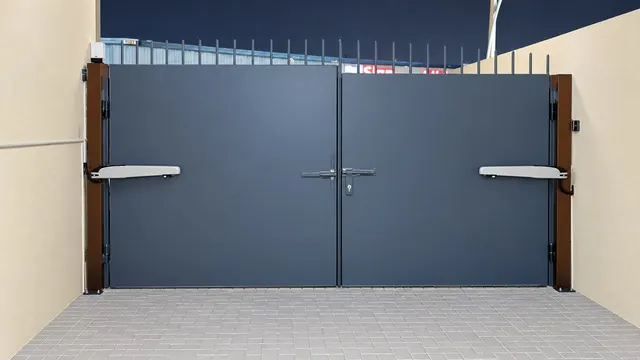
Dual-Leaf Swing Gate Motors Fitted in National Paint, Sharjah
National Paint, Sharjah. A manual dual-leaf gate now opens from a remote control, with a linear arm motor on each leaf and safety photocells.
What should I send so we can check your gate?
What to send us
- A photo of the gate or door from the street and one from inside the driveway.
- A close photo of each photocell and the post it is mounted on.
- A photo of the control box and the motor label, if you can read it.
- Whether you have small children or small pets, and where they play.
- What the gate does when something is in the way, if you have tried it with a box.
- Whether the gate is shared with neighbours or a community.
Send them in one message through the photo page. We then book a site visit to test the devices and set the force.
Frequently asked questions
At what age is it safe for children to use the gate remote?
There is no safe age that suits every child. Treat the remote as an adult tool, and let older children use it only when an adult is watching and the rules are understood. Younger children should not hold one, because a remote moves a heavy door.
Will the gate stop if my dog or cat runs under it?
Only if a sensor detects the animal in time. A beam set above the animal does not. Ask for a second pair of photocells set low or a safety edge, and keep pets away from the driveway while the gate moves. A sensor is a last layer, not a replacement for care.
Are old gates and garage doors less safe than new ones?
Not by age alone. The risk is in missing devices, worn parts and wrong settings. An older gate with working photocells, a safety edge and a tested reverse can be safer than a newer one without them. A technician can check what is fitted and what is missing.
Can I add photocells to an existing gate?
Often yes. Photocells and a safety edge can be added to many existing gates, depending on the control board and the posts. A technician checks that the board has the inputs and that the gate can carry a sensor. Send photos of the posts and the board first.
Should a garage door reverse when it touches something?
Yes. It should reverse on contact and its photocells should sit near the floor. Test it with a flat object under the door, not a person. If it does not reverse, stop using the automatic mode and call for a repair.
How often should the sensors be tested?
A simple test each month with a box is enough for a family, with a technician check once a year or more often on a busy gate. Test again after any power cut, impact or repair. If the beam is dirty or knocked, fix it before the next use.
Need this done on your property?
Tell us the opening, the fault or the equipment. We reply with a free site visit and a written quote.
Call +971 50 495 3512 WhatsApp us Get a quote
Open 24/7 · Same-day technician · Free site visit
#garage-doors#villas#sliding-gates#swing-gates#ajman#gate-safety#uae#sharjah
Related products
-
 Featured
Residential Garage Doors
Garage doors for villas and homes in insulated sectional, roller and side-hinged styles, with finishes to suit the house, quiet operators and remote or phone control.
View details -
Automatic Sliding Gates
Made-to-measure automatic sliding gates for villas, compounds and industrial yards, with a quiet motor, photocells and remote, keypad, intercom or phone control.
View details -
Automatic Swing Gates
Automatic swing gates for villas, farms and compounds, using arm, ram or underground operators with safety devices, and able to automate an existing manual gate.
View details -

Garage Door Openers
Chain, belt and shaft garage door openers for sectional and roller doors, supplied, fitted, replaced and repaired after a free site visit anywhere in the UAE.
View details