


/
Automatic gate safety works in layers: photocells detect obstructions without contact, safety edges detect contact, force limits cap pushing, flashing lights warn people, and manual release frees the gate in a fault. UAE heat, dust and salt wear these quietly, so test monthly and call a technician instead of bypassing any device.
- Photocells detect without touching and safety edges detect on contact; most gates need both where the layout calls for it.
- Force limits matter as much as sensors, and raising force to cure a sticking gate removes protection.
- Heat, dust, salt air and power dips degrade safety devices slowly, so test monthly.
- A ten minute walk-through with a soft test object catches most failures.
- Never bypass or disable a device: stop using the gate and call a technician.
هذا المحتوى متاح حالياً باللغة الإنجليزية فقط. English
Short answer: An automatic gate stays safe through layers, not one device: photocells see an obstruction before contact, a safety edge feels contact, force limits cap how hard the gate pushes, a flashing light warns people, and a manual release frees the gate in a fault. In the UAE heat and dust wear these layers quietly, so test them monthly.
Key takeaways
- Photocells detect without touching. Safety edges detect on contact. A good gate has both where the layout calls for it.
- Force limits matter as much as sensors. A gate set too strong will push through an obstruction while the sensors are still working.
- Heat, dust, salt air and sudden power dips degrade safety devices slowly, so a gate that "worked last month" may not be safe today.
- A ten minute monthly walk-through catches most failures. The test needs no tools.
- Never bridge, disable or "adjust until it stops stopping". Stop and call a technician.
What safety devices does an automatic gate need?
Think of five jobs. Each one is a separate device or setting, and each one fails in a different way.
| Job | Device or setting | What it does | How it fails |
|---|---|---|---|
| See the obstruction | Photocells | Stops or reverses when the beam is broken | Misaligned, dirty, wrong height, dead battery or wiring |
| Feel the obstruction | Safety edge | Stops or reverses on contact | Cracked rubber, cut cable, water inside |
| Limit the force | Force or torque setting on the controller | Stops the gate when it meets resistance | Set too high, or drifting as the gate gets heavier or stiffer |
| Warn people | Flashing light and signs | Tells people the gate is about to move | Bulb or LED dead, lens faded by sun |
| Free the gate | Manual release | Lets you open the gate by hand when power or the motor fails | Key lost, release seized by dust, gate left released |
Which of these your gate needs depends on its type, layout and use. Ask your installer what is fitted and why. For what is commonly expected on UAE gates, read what safety devices are expected on an automatic gate, and confirm the exact requirement with the approving authority or your community management. We do not state a regulation here.
How do photocells work, and where should they go?
A photocell pair is a transmitter and a receiver facing each other across the opening. The receiver watches for the beam. When something breaks it while the gate is closing, the controller stops the gate and normally reverses it. Our page on photocell safety sensors lists what we fit.
Position matters more than price. A beam set too high passes under a child or a low car front. A beam set too low reads the kerb, a puddle or a leaf. For a villa driveway, two heights are common: one low, for small people and animals, and one at about bumper height. Your installer decides the exact heights for your gate and drive.
Photocells also have a job on opening, not only on closing. Depending on the controller setting, a beam can also stop the gate while it is opening, which protects a car reversing out or a person walking through. On a swing gate, a second pair may watch the arc of the leaf.
UAE conditions. Afternoon sun at 45 to 50 C bakes plastic housings, fades lenses and dries out the seals. A sensor may then fail only in the heat of the day and work again at night, which is a hard fault to catch. Low winter sun pointing straight into a receiver can blind it at one time of day. Sand fills the lens, and salt air on the Ajman and Sharjah coast corrodes terminals. None of these causes an obvious failure. They shorten the beam's margin until one hot afternoon it is gone.
Field note: The most common photocell fault we meet is not a dead unit. It is a unit knocked a few degrees out of line by a car reversing, a pressure washer or a gardener. The gate then closes on some days and refuses on others, and the owner assumes the motor is failing.
What is a safety edge and when does a gate need one?
A safety edge is a strip fitted on the leading edge of a moving gate. It senses contact through a pressure-sensitive element. When it is pressed, it tells the controller to stop and reverse. It reacts to touch, so it still works where the beam cannot reach.
It is most useful at points where a beam is awkward: the closing edge of a sliding gate as it meets the post, the gap between a swing leaf and the wall, and low corners where a beam would need a post to be mounted. A second purpose is as a backup where dust or glare reduces the beam.
Edges age. The rubber cracks in the heat, the cable flexes with each cycle, and water gets in at the joints. A cracked edge may look intact. Press along its full length during your monthly test and listen for the gate to react at every point, including the ends.
See automatic sliding gates and automatic swing gates for the gate types we automate.
What are force limits, and why do they matter?
The motor does the pushing, and the controller decides how hard. If it is set too strong, the gate will push against a person or a bumper harder than it should before it stops. If it is set too weak, a gate that has become stiff will stop in the middle of every cycle and lead the owner to turn it up.
That is the trap. A gate drifts heavier over time: wheels wear, tracks fill with sand, hinges dry out, and summer heat thins grease. The temptation is to raise the force until the gate runs again. Raising force hides a mechanical problem and removes a layer of protection at the same moment.
Force is set and checked by a technician with the right instrument. You should not change it yourself. Wind, a slope or a bent leaf can also push the reading, so it is a setting for the survey and the service visit. Our note on sliding gate motor faults covers what to check when a gate stops mid-travel.
Why do flashing lights and signs matter?
A flashing lamp tells people the gate is about to move. A pedestrian who sees it keeps clear, and a driver does not push in behind another car. Many controllers also offer a pre-flash: the lamp runs for a moment before the gate starts. A dead lamp is a safety fault, even if the gate still runs.
Check that the lamp is visible from the street and from inside, that the lens is not faded or cracked, and that signs are legible. In a villa community, check with your community management before changing visible fittings such as a lamp or a sign.
How does the manual release work, and when do you use it?
Every motorised gate should have a way to open it by hand if the power or the motor fails. On a sliding gate it is usually a key or a handle on the motor. On a swing gate, a key on each arm. Our swing gate project in National Paint, Sharjah included photocells and a manual key release.
- Switch the controller off or note the gate is without power.
- Check nobody is in the path of the gate.
- Use the key to release the motor. Push the gate by hand, slowly.
- When power is back, close the gate by hand, lock the release and test.
The common failure is a gate left released after a storm. Anyone can then push it open. Put a reminder on the key hook. See how to reset a swing gate after a fault.
A 10 minute monthly gate safety test
Do this at the same time each month, with the gate area clear of children and pets. Use a soft cardboard box or a broom handle as the test object, not your hand or a person.
- Look first. Check for dust on photocell lenses, cracked housings, a dead lamp, a loose edge strip, and anything stored in the gate's path.
- Clean. Wipe photocell lenses with a soft dry cloth. Do not hose the housings.
- Beam test, closing. Start a close cycle and put the test object through the beam. The gate should stop or reverse at once.
- Beam test, opening. Do the same during opening. Note how the gate reacts. It should follow the setting your installer chose.
- Edge test. Press the edge lightly along its length with the test object. The gate should stop or reverse.
- Force check. Close the gate onto the test object. It should stop with a light touch. If it pushes, stop and call.
- Lamp and signs. Confirm the flashing lamp works during movement.
- Release. Confirm the key is in its place. If the gate type allows, release and re-engage it by hand and check it locks again.
- Write it down. Note the date and any fault, and photograph anything odd.
Scored self-check
Score each line: 2 for fine, 1 for doubtful, 0 for fails. A total of 14 to 16 is routine. Eight to 13 means book a service. Below 8, or any 0 on a beam, edge or force line, means stop using the gate for vehicles until it is checked.
| Check | 2 | 1 | 0 |
|---|---|---|---|
| Photocell lenses clean and aligned | Clean, steady | Dusty, slightly off | Broken or dead |
| Beam stops the gate, closing | Every time | Sometimes | Never |
| Beam stops the gate, opening | As set | Unsure | No reaction |
| Safety edge reacts along its length | Everywhere | Some points | None |
| Gate stops on light contact | Yes | Slow to react | Pushes |
| Flashing lamp works | Yes | Dim | Dead |
| Manual release key available and works | Yes | Stiff | Lost or seized |
| Gate travel smooth, no scraping | Smooth | Noisy | Jams |
Symptom, cause and action
| Symptom | Likely cause | What to do |
|---|---|---|
| Gate will not close, lamp flashing | Beam blocked or photocell misaligned | Check for objects, wipe lenses, look at alignment. See why a gate reverses or refuses to close |
| Gate closes in the evening but not at noon | Heat-affected sensor or housing | Note the time. Call a technician |
| Gate reverses on nothing | Dirt on lens, sun on receiver, stiff gate, force set too low | Clean, then call if it continues |
| Gate does not react at one spot on the edge | Cable or edge damage | Stop using the gate. Call |
| Gate closes after hitting a car | Force too high or no working sensor | Stop and call |
| After a power dip the gate is odd | Controller settings or limit positions | Try the reset in the manual. If it persists, call |
For more checks before you call, see what to check before calling a technician.
When should you stop and call a technician?
Stop using the gate for vehicles and keep people away if any of these is true.
- The gate does not stop or reverse when it meets the test object.
- A photocell or edge has been bypassed, taped, or wired out.
- You see burnt cable, a hot control box or water inside the housing.
- The gate has hit a person, child or pet, even lightly.
- The release is seized or the gate has been left released after a fault.
- Someone suggests raising the force so the gate stops stopping.
Do not climb on a moving gate, reach through it or work on the motor while it has power. The installer should repair safety devices, not the user. Book via site visit, or photocell repair in Al Nuaimiya if you are nearby. A maintenance contract puts the test routine on a schedule.
Villas, compounds and rented properties
On a rented villa, the landlord usually owns the gate and the tenant uses it, so it is not always clear who must keep the safety devices working. Agree it in writing. In a gated community, the community or the master developer may set rules for visible changes such as a new lamp or a gate colour, so check with your community management first.
Timing matters too. If the house will be empty over the summer holidays, do the routine before you travel, and ask a neighbour or the building contact to know where the release key is. For villa gates in Al Nuaimiya, Al Rashidiya, Al Rawda and Al Zahia, the same checks apply. Heat, dust and sea air wear gates faster than most owners expect, and the post on gate maintenance in Ajman covers a seasonal routine. A gate that reads cars with a camera adds another system, see our ANPR parking guide.
Worked example: sizing the stop in a sliding gate
This is an illustration, not a QNAD job. A sliding gate has a 5 m opening and takes about 20 seconds to close, so the leading edge moves at about 0.25 m each second. That is slow, but the gate may weigh several hundred kilograms. Anything caught at the closing post is pressed by a heavy leaf, and a slow speed is not a reason to skip the edge.
The photocell pair sits across the opening at two heights, one near 0.3 m and one near 0.7 m. The edge runs on the closing face. If the gate stops within about 0.1 s of contact, it travels about 25 mm more. In practice, the stop depends on the controller, the inertia and the setting, so a technician tests and adjusts it on site. The point is that slow does not mean harmless.
Mistakes and myths about gate safety devices
| Myth or mistake | What is true |
|---|---|
| "Photocells are enough." | A beam misses things at low heights and corners. Edges and force limits cover the rest. |
| "The gate is slow, so it is safe." | A heavy gate moving slowly still crushes. |
| "Turning up the force fixes a sticking gate." | It hides the cause and removes protection. |
| "Bypass the sensor, it keeps tripping." | A sensor that trips is telling you something. Fix the cause. |
| "A gate that closes is working." | Safety devices are only proven when you test them. |
Field note: When a photocell is taped over or its wires are twisted together, there is almost always a reason, such as a gate that stuck or a beam that kept tripping. We fix that reason, then restore the device. Bypassing the sensor treats the symptom and leaves the hazard.
Gate safety terms in English and Arabic
| English term | Arabic term | Meaning |
|---|---|---|
| Photocell | خلية ضوئية | Beam sensor that detects obstacles |
| Safety edge | شريط أمان | Contact strip on the moving edge |
| Gate motor | محرك بوابة | Operator that moves the gate |
| Control board | لوحة التحكم | Controller that runs the gate |
| Flashing lamp | مصباح تحذير | Light that warns before movement |
| Manual release | فك يدوي | Frees the gate for hand operation |
| Obstruction | عائق | Anything in the gate's path |
| Sliding gate | بوابة منزلقة | Gate that moves sideways on a track |
| Swing gate | بوابة مفصلية | Gate that opens on hinges |
| Maintenance contract | عقد صيانة | Planned service visits |
Frequently asked questions
How often should I test my gate safety devices?
Monthly is a practical routine for a gate used daily, using the ten minute test above. Add a test after a storm, a power cut, a hit by a vehicle or any repair. Your installer's service visit covers deeper checks.
Can I adjust my photocells myself?
You can clean the lenses. Alignment and settings are for a technician, because a small change can leave the beam working in the daytime and failing at night. If the gate keeps tripping after a clean, call us.
Why does my gate stop and reverse for no reason?
Common causes are a dirty or misaligned photocell, low sun in the receiver, a stiff gate or a force setting that is too low. Clean the lenses first. If it repeats, a technician should check the beam and the gate travel.
Do all gates need a safety edge?
It depends on the gate type, the layout and how the gate is used. Your installer should explain what each layout needs, and the approving authority or your community management decides the rule on your property.
Is it safe to bypass a photocell that keeps tripping?
No. A tripping photocell points to a cause, such as misalignment, a dirty lens or a fault. Bypassing it removes a layer of protection. Have the cause found and fixed.
What do I do if the gate is stuck during a power cut?
Release the motor with its key, move the gate by hand and secure it. When power returns, re-engage the release and test it before you use the gate.
Can you add photocells to an old gate?
Often yes, if the controller has the inputs. We check the board and wiring first. Some older controllers need replacing, and that is a decision for after a survey.
Do gate safety devices need servicing in the UAE climate?
Yes. Heat, dust, humidity and salt age lenses, rubber, cables and batteries. A service visit checks them before they fail. A maintenance contract schedules it.
Next step
If your gate fails any line in the self-check, stop using it for vehicles and call +971 50 495 3512. You can also send photos of the photocells, the edge and the motor through send a photo, or ask for a quote. We cover Ajman and Sharjah, and book Dubai and Abu Dhabi jobs by appointment.
#villas#sliding-gates#checklist#ajman#gate-safety#photocells#sharjah
منتجات ذات صلة
-
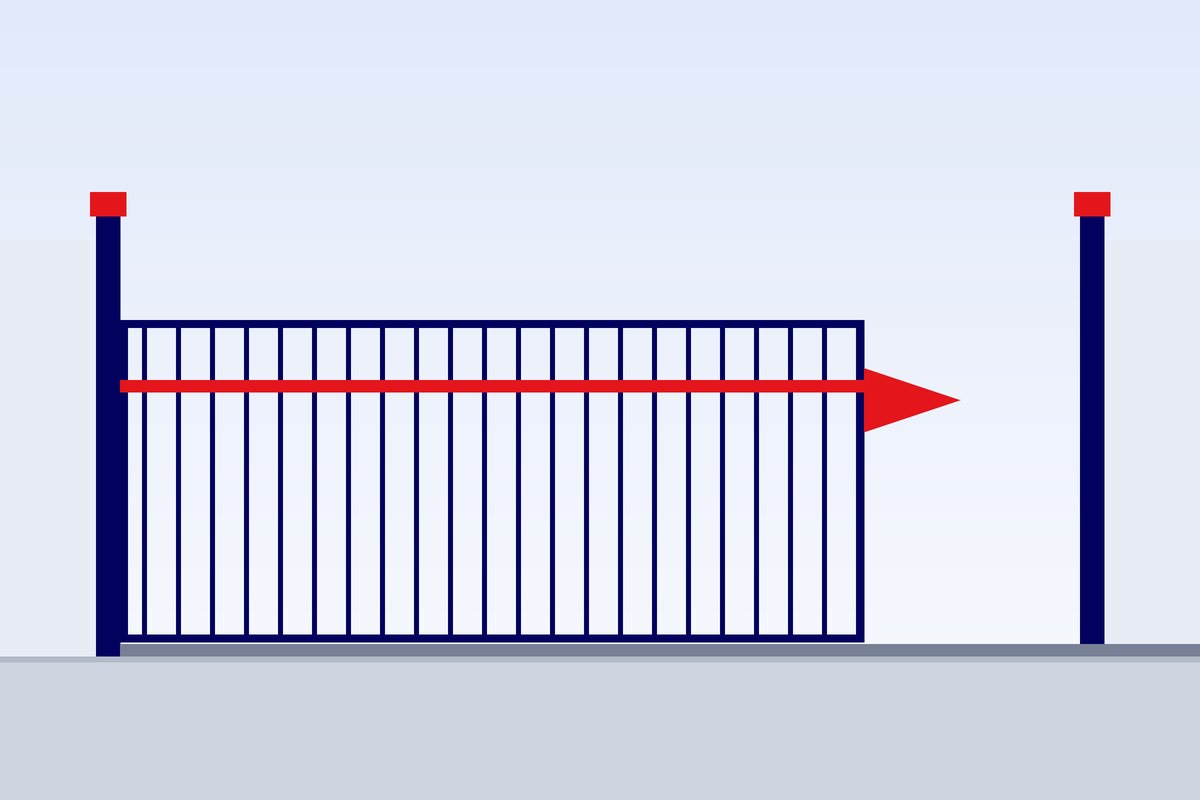
البوابات المنزلقة الأوتوماتيكية
بوابات منزلقة آلية للفلل والمجمعات والساحات التي لا تحتاج إلى غرفة دوارة، مع أجهزة استشعار السلامة والتحكم عن بعد والتحرير اليدوي لانقطاع التيار الكهربائي.
عرض التفاصيل -
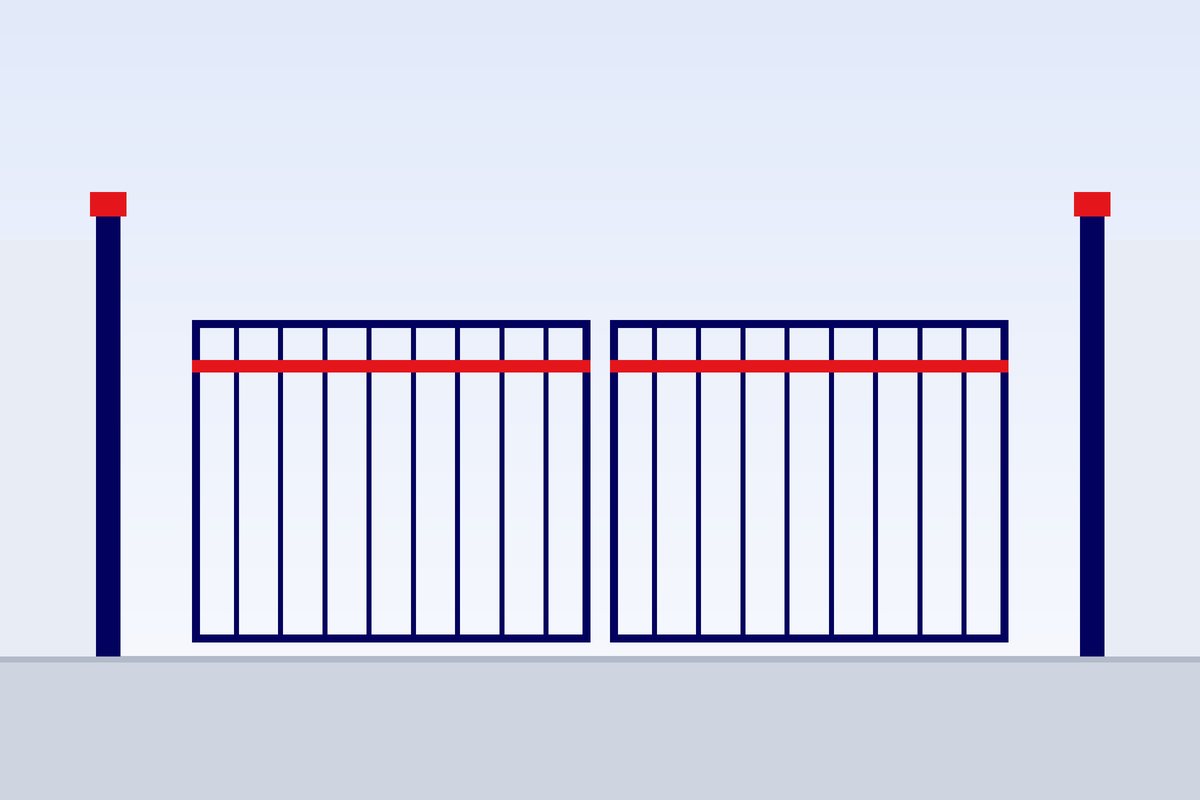
البوابات المتأرجحة الأوتوماتيكية
بوابات سوينغ ذات ورقة واحدة أو مزدوجة مع مشغلي الذراع أو تحت الأرض، وأجهزة استشعار البدء والتوقف والسلامة الناعمة، للفيلات والمجمعات والممرات مع مساحة للتأرجح.
عرض التفاصيل -

بوابة المحركات
محركات بوابات منزلقة ومتأرجحة وتحت الأرض وكبش للبوابات الجديدة والقائمة، مع لوحات التحكم وأجهزة استشعار السلامة وأجهزة التحكم عن بعد، يتم توريدها وتركيبها واستبدالها وإصلاحها.
عرض التفاصيل

