

إجابة سريعة
An automatic gate is safe when several independent devices work together: photocell beams, a safety edge on the leading edge, a closing force that has been measured and limited, and a manual release that you have tried. A photocell on its own does not guarantee a person is detected. Owners can test the beam, the reverse on a firm obstacle and the release in about ten minutes, but force measurement and edge wiring need a technician.
أهم النقاط
- A photocell is one layer, not the whole answer. A gate also needs a safety edge or a measured force limit.
- Two independent devices on every closing edge is the principle behind modern gate standards. Ask which standard your installer set the force to.
- Closing force can drift over time, so it needs to be re-measured at service, not just at installation.
- Test the beam, the reverse and the manual release every month. It takes ten minutes and needs no tools.
- Never test with a person, a child or a pet. Use a firm object such as a wooden block or a bucket.
هذا المحتوى متاح حالياً باللغة الإنجليزية فقط. English
إجابة مختصرة: an automatic gate is safe only when several devices back each other up. That means photocell beams across the opening, a safety edge on the closing edge, a closing force that was measured and limited when the gate was commissioned, and a manual release that someone in the house has actually used. A photocell on its own is not enough. This guide explains each layer, how to test it yourself in about ten minutes, and which checks you should leave to a technician.
أهم النقاط
- A photocell is one layer. A gate also needs a safety edge or a measured force limit.
- The principle behind modern gate standards is two independent protection devices, so a single failed sensor does not leave a person unprotected.
- Closing force drifts with wear, heat and a loose gate. It has to be re-measured at service.
- Test the beam, the reverse and the manual release monthly. Never test with a person or a child.
- If your gate does not reverse on a firm obstacle, stop using the automatic mode and call a technician.
هل يواجه بابك أو بوابتك مشكلة؟
اتصل +971 50 495 3512 راسلنا على واتساب احصل على عرض سعر
على مدار الساعة · فني في نفس اليوم · معاينة مجانية للموقع
Why does gate safety matter more than most owners think?
A steel sliding gate is heavy, and the motor that moves it cannot tell a car bumper from a child. Only the safety devices tell it to stop.
There are real cases behind this. In September 2018 Gulf News reported that a four-year-old boy died in Fujairah when an automatic sliding gate closed on him in front of his home, and that police opened an investigation into the cause. We do not know the technical details of that gate. The point is narrower: gates are heavy, children play near them, and the safety equipment is what stands between them.
In the United States, the product-safety regulator publicised a gate standard adopted in March 2000 that requires at least two mechanisms to prevent entrapment: a sensing device that reverses the gate on an obstruction, plus a second mechanism such as an electric eye or an edge sensor. We cannot quote you a UAE rule for a private villa gate. What applies depends on your community and the authority, so confirm with your building's management. The two-device principle still holds for any gate.
What are the four layers of automatic gate safety?
| Layer | What it does | What it does not do |
|---|---|---|
| Photocell beam | An invisible infrared beam across the opening. If anything breaks it while the gate closes, the gate stops or reverses. It also stops a closed gate from starting to close onto a parked car. | It only protects the line of the beam. A child's hand, a pet's tail or a foot at the hinge side is not in that line. A beam that is dirty, misaligned or bypassed protects nobody. |
| حافة الأمان | A pressure strip on the leading edge of the gate, and on the closing edge of a swing gate. Contact squeezes it and the motor stops and reverses. | It only works at the edge it is fitted to. A pinch point between a gate and a pillar needs its own protection. |
| Force limit | The control board stops the motor when it meets resistance above a set value. The value is set and measured at commissioning. | It can drift as the gate wears, the track fills with sand or the board is changed. A force setting that was right in year one may not be right in year three. |
| فك يدوي | A key or lever that disconnects the motor so the gate can be moved by hand, in a power cut or if someone is trapped. | It does nothing if the key is lost, the cover is seized with corrosion or nobody knows where it is. |
One of the pages we read while preparing this guide, from a European gate automation maker, says it directly: photocells do not guarantee person detection and the prevention of crushing without an integrated force limitation and obstacle detection system. That matches what we see on site. When a villa owner tells us "it has sensors", they usually mean one pair of photocells. That is one layer out of four.
What are EN 12453 and EN 12445, and do they matter in the UAE?
EN 12453 is a European standard that sets safety requirements for powered gates and doors. EN 12445 is the companion standard that describes how to test them, including measuring the forces the gate produces with a calibrated instrument. Brands sold in the UAE such as CAME, BFT, FAAC و Nice are European and design their boards around them.
We cannot tell you that either standard is a legal requirement for your villa gate, because that depends on your property and the authority that governs it. What you can do is ask your installer a plain question: which standard did you set the closing force to, and can you show me the reading? A technician who commissioned the gate properly can answer in one sentence. A technician who cannot answer is telling you something about the job.
How do I test my gate safety devices at home?
Do these once a month. You need a firm, light object such as a wooden block, a plastic crate or a bucket filled with sand. You do not need tools. Never use a person, a child or a pet, and never put your hand in the path.
- Beam test while closing. Open the gate with the remote. Press close and, once it starts moving, place the block in the line of the photocells. The gate should stop or reverse straight away. If it carries on, the beam is dead, misaligned or bypassed.
- Beam test while open. With the gate open, break the beam with the block and press close. The gate should not start to close.
- Obstacle test. Place the block in the path of the gate, away from the beam line if you can. Let the gate close onto it. It should stop and reverse within a short distance, without pushing or grinding. If it pushes, grinds or crushes the block, switch the gate to manual use and call us.
- Safety edge test. Press the edge strip firmly with your open palm while the gate is closing. The gate should stop and reverse. Check the rubber for cracks, and the cable for rust or a loose connection.
- Manual release test. With the gate stopped and the remote in your hand, use the release key as the manufacturer shows. Move the gate by hand. Push it all the way open and closed. Then restore the motor, and confirm the gate runs on the remote. A page we read from a UK installer makes a point worth repeating: never force a gate while it is in manual if it resists, because the linkage can be damaged. If it does not move smoothly, something is wrong with the gate and it needs a visit.
If anything fails, do not leave the gate in automatic mode with children around. Put it on manual release, keep people clear and call for a check. You can see what we do on a safety call on our photocell and safety sensor repair page.
How often does a photocell fail in UAE conditions?
We have no statistic, and nobody should quote one without data. Here is what we find on call-outs.
- Dust and sand on the lens. Fine sand settles on the glass and cuts the range of the beam. The gate may close sometimes and refuse other times. A wipe with a soft cloth fixes it often.
- Misalignment. A knock from a car, a swinging branch or a loose bracket moves one unit by a few degrees.
- Salt air. In Ajman and near the Corniche and Al Zorah, salt corrodes the terminals behind the cover. A beam that fails when it rains or when the humidity is high is a hint to open the unit and look.
- Bypassed devices. A gate that kept stopping for a fault, and someone has linked the safety input to make it stop complaining. We find this more often than we would like. It is dangerous and it hides the real fault.
Our guide to sliding gate motors that stop working covers the other faults that look like a safety fault, and the maintenance checklist lists what a service covers.
Why does closing force need to be re-checked?
When a technician commissions a gate, the control board is set so the motor stops when it meets a limited resistance. This setting is measured, not guessed. The measurement is repeated at different points on the gate travel, because a gate pushes harder in some places than others.
Over time the numbers change. Rollers wear, so someone raises the force to keep the gate moving instead of fixing the cause. Sand builds up in the track. A new board is fitted and left at its default. A UK safety page we read states that closing force must be re-checked at every annual service because motor force can drift over time. We agree. If a technician services your gate and never measures force or tests the edge, ask why.
What should I do about children and pets?
- Teach children never to stand in the gate's path or hang on it.
- Where possible, fit a wall-mounted button or intercom away from the gate line, so a person operating the gate can see it moving.
Which safety checks can I do myself, and which need a technician?
| You can do | Leave to a technician |
|---|---|
| Wipe photocell lenses | Re-aim or replace photocells and test the safety input wiring |
| Beam, reverse and release test with a firm object | Measure closing force with an instrument and adjust it |
| Check lamp and visible edge rubber | Fit, wire or replace a safety edge |
| Note new noises, jerks or slow travel | Replace rollers, rack or motor, reset limits |
| Keep the release key labelled and in a known place | Free a seized release or replace a lock barrel |
Do not open the control board or the mains supply yourself. It holds mains voltage.
When should I upgrade an old gate instead of repairing it?
Consider an upgrade if the control board cannot accept a safety edge input, the gate is too heavy or out of true for the motor, or parts are no longer available. Replacing a board and adding an edge keeps the gate and motor, so it can cost less than people fear. See our تركيب بوابة سحب و تركيب بوابة متأرجحة pages for what a new installation includes, and our إصلاح محرك بوابة page if the motor is the weak point.
For car parks and compound entrances with a barrier, a vehicle loop detector is a further layer: it keeps the barrier open while a vehicle is under it. Read about كواشف حلقات مغناطيسية and our حاجز منزلق range.
الأسئلة الشائعة
Are photocells enough to make my gate safe?
لا. Photocells protect the line of the beam and nothing else. A safety edge on the closing edge and a measured force limit are the other layers, and a manual release matters for a trapped person or a power cut.
How do I know if my gate safety sensors are working?
Do the monthly test in this guide with a firm object. The gate should stop or reverse when the beam is broken while closing, should not start closing with the beam broken, and should reverse when it meets the block.
What is a safety edge on a gate?
It is a pressure-sensitive rubber strip on the edge of the gate that closes onto something. When it is squeezed, it signals the control board to stop and reverse the gate.
My gate closes on my car. What is wrong?
Most often the photocell is dirty, misaligned or not wired to the control board, or the safety input has been bypassed. Stop using the automatic mode until it is checked. Keep cars out of the path and call a technician.
How often should gate safety be checked by a technician?
At least once a year, and more often for a busy compound gate. The visit should include a test of the beam, the edge, the closing force and the release. Our annual maintenance checklist shows what we cover.
احجز معاينة مجانية للموقع
If you are not sure your gate would pass the tests above, we will check the beam, the edge, the force and the release on a site visit. We serve Ajman, Sharjah, Dubai and Abu Dhabi, and a villa in الراشدية or النعيمية can usually be scheduled quickly. اتصل أو راسلنا على واتساب +971 50 495 3512, or request a free site visit here. Send a photo of the opening and the rough size and we will tell you what to expect before anyone drives out.
هل تحتاج إلى تنفيذ هذا في عقارك؟
أخبرنا بالفتحة أو العطل أو المعدات. نرد عليك بمعاينة مجانية للموقع وعرض سعر مكتوب.
اتصل +971 50 495 3512 راسلنا على واتساب احصل على عرض سعر
على مدار الساعة · فني في نفس اليوم · معاينة مجانية للموقع
#ajman#gate-safety#photocells#safety#gate-maintenance#villa-gates
منتجات ذات صلة
-
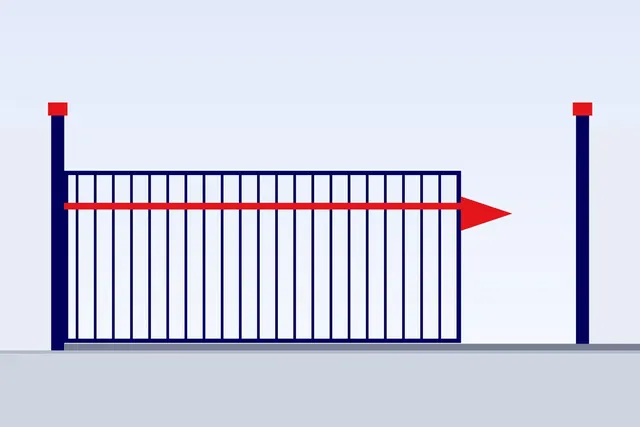
البوابات المنزلقة الأوتوماتيكية
بوابات منزلقة أوتوماتيكية حسب المقاس للفلل والمجمعات والساحات الصناعية بمحرك هادئ وخلايا ضوئية وريموت ولوحة مفاتيح وإنتركوم أو تحكم بالهاتف.
عرض التفاصيل -
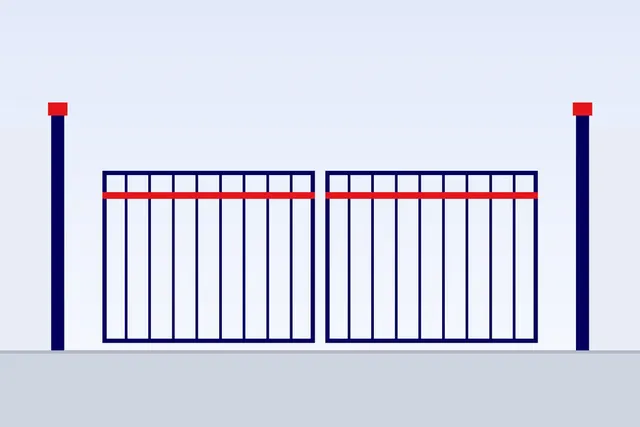
البوابات المتأرجحة الأوتوماتيكية
بوابات متأرجحة أوتوماتيكية للفلل والمزارع والمجمعات، باستخدام مشغلي الذراع أو الكبش أو تحت الأرض مع أجهزة السلامة، وقادرة على أتمتة بوابة يدوية موجودة.
عرض التفاصيل -

حواجز البوابات المتأرجحة
حواجز بوابة تأرجح المشاة للردهات والمناطق الآمنة، مع حارات واسعة الوصول، وأجهزة استشعار الحارات والتكامل مع البطاقة والوجه والتحكم في الوصول البيومتري.
عرض التفاصيل -

سور البوابة
حاجز منزلق منخفض لمداخل المركبات حيث لا يتناسب ذراع الرافعة، ويعمل مع كاشفات الحلقات والخلايا الكهروضوئية والعلامات ولوحات المفاتيح والتعرف على لوحة الأرقام.
عرض التفاصيل